
Production Planning
This article explains how to best use Production planning and scheduling when you have a combination of small and large jobs. For example, a furniture manufacturer might have small jobs like specific pieces of furniture and a large job like shop fitting an entire store.
We used the example of an entire store being shop fitted to illustrate our concepts.
Problem: Release a massive job into production can cause severe bottlenecks and specific work centres (e.g. CNC nesting or Edge Banding). It can starve downstream operations (e.g. assembly or finishing) and completely stop production on smaller, high-margin jobs.
Solution: Large jobs should be divided into smaller, modular jobs.
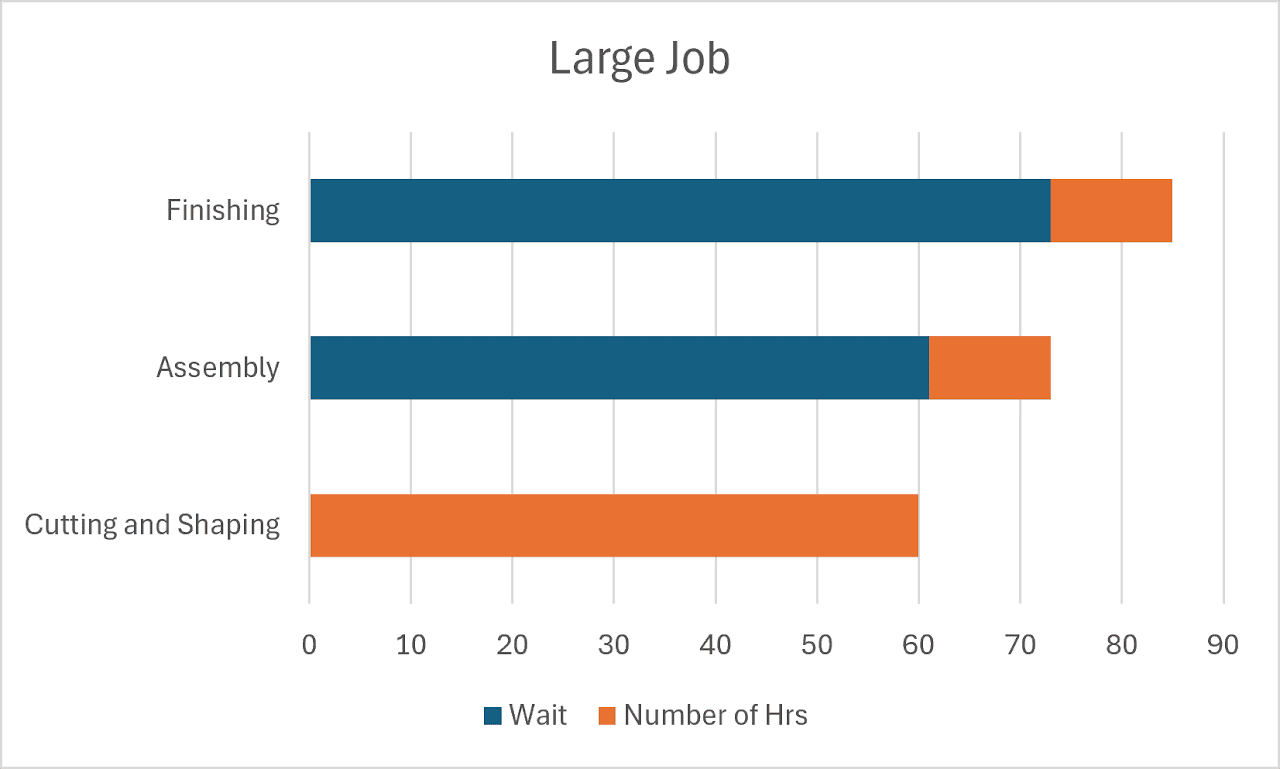
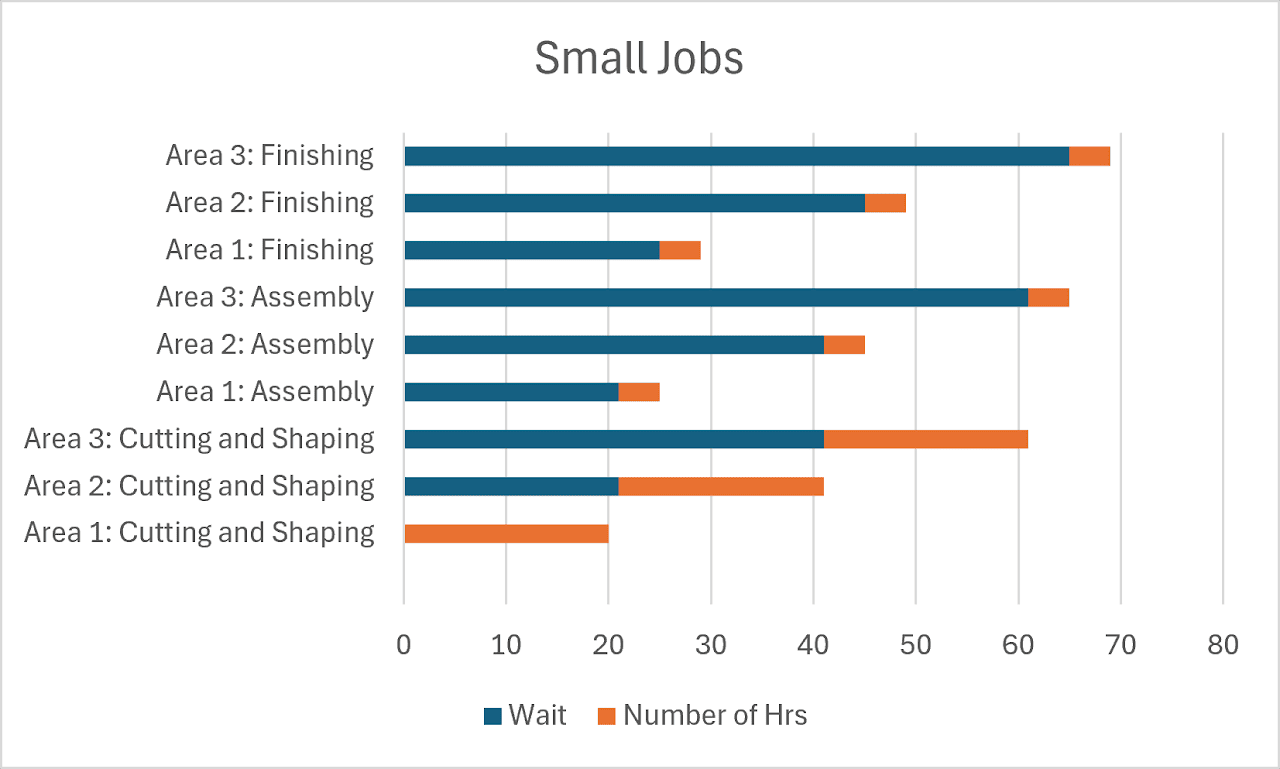
Why you should implement the solution
| Field | Description |
|---|---|
| Cashflow and Billing |
|
| Production Flow |
|
| Flexibility |
|
| Materials Management |
|
How to Break Down a Large Job
1. Architectural Breakdowns (Phase by Zone)
Do not build by item type (e.g. all cabinets first, then all shelving). Instead, break the job down by the retail zones or installation sequences of the store:
| Field | Description |
|---|---|
| Job Part A | Back-of-house storage and perimeter wall-lining panels (typically needed on site first). |
| Job Part B | Main floor cash wraps, service counters and heavy millwork. |
| Job Part C | Centre-floor freestanding gondolas, display tables and loose furniture. |
2. Functional Sub-Jobs (The Go-Live Sequence)
Group components into sub-jobs based on their manufacturing routing.
- If a cash wrap requires a heavy amount of solid-surface fabrication (like Corian) or custom metal brackets, split those out into independent, parallel sub-jobs.
- This division ensures long-lead-time sub-assemblies do not hold up standard melamine or MDF carcass cutting.
3. Shipping and Installation Constraints
The absolute gold standard for shop-fitting production is reverse scheduling from the installation date.
- If Site Installation Week 1 requires only the structural perimeter frames, that is Sub-Job 1.
- If the glass display tops are not needed until Week 3, that is Sub-Job 4. Producing Sub-Job 4 early just creates a storage nightmare on your shop floor.
Managing the "Hybrid Shop Floor" (Big vs. Small)
When you break a large job down, you turn a mega-project into multiple mid-sized jobs. This breakdown lets you mix them with your everyday smaller jobs.
Tactical Implementation Tips
To execute this process without drowning your team in paperwork, implement these rules:
| Field | Description |
|---|---|
| Parent-Child Job Linkage | Use a master project tracking ID (Parent) but issue distinct production tickets (Children). For example, Project #1024 becomes jobs such as Job #1024-A (Perimeter) and Job #1024-B (Counters). |
| Dynamic Buffering | Insert deliberate buffer gaps between the modular phases of the large project. Use these gaps to flush out small, quick-turnaround jobs. |
| Colour-Coded Factory Routing |
|
Conclusion
By treating the big store fit-out as a series of coordinated, smaller milestone jobs, you preserve your factory's agility, keep your machinery steadily fed and significantly protect your cash flow.